At the heart of every organization there is an invisible but decisive engine: people.
They turn strategy into action, values into culture and objectives into concrete results. Today, however, that human engine is powered by a new transformative energy: technology. Far from replacing talent, technology has amplified it, enabling smarter decisions, more meaningful experiences and organizations better prepared to face the complexity of the future.
For decades, the Human Resources function was seen mainly as an administrative center, focused on payroll processing and contract management. Digital transformation has profoundly changed that role. HR now holds a strategic position, with a direct impact on organizations’ competitiveness, innovation and sustainability. Technology solutions free up time and resources, allowing HR professionals to concentrate on what truly creates value: attracting, developing and retaining talent.
Integrated Human Resources management systems automate repetitive tasks such as managing vacations, benefits or salaries, increasing efficiency and reducing errors. Internal chatbots answer frequently asked questions, while self-service platforms give employees more autonomy. The result is simpler, faster and more transparent processes that improve people’s overall experience.
In recruitment and selection, Artificial Intelligence and Machine Learning have become decisive allies. Algorithms analyze large volumes of data, identify patterns of success and support better-informed decisions about candidates’ fit for the role and for the organizational culture. Video interview tools and analytical dashboards speed up processes and provide real-time metrics. The central challenge is to ensure that these technologies help reduce bias and promote fairer, more inclusive decisions, rather than perpetuate it.
Skills development is also undergoing a profound transformation. Learning has ceased to be occasional and in-person and has become continuous, digital and personalized. E-learning platforms, microlearning, gamification and immersive environments make it possible to train employees in a scalable way aligned with business needs. Adaptive systems adjust content to each individual’s pace and learning style, strengthening engagement and effectiveness.
Advanced data analysis – People Analytics – converts scattered information into strategic insights. Today it is possible to anticipate turnover risks, identify demotivating factors and measure the real impact of HR initiatives. Based on evidence, leaders make faster, more informed decisions that are aligned with the organizational strategy.
At the same time, technology plays a growing role in employee well-being and experience. Apps support physical and mental health, continuous feedback platforms strengthen recognition and collaborative tools enable remote and hybrid work models, maintaining closeness, alignment and a sense of belonging.
This progress, however, demands ethical responsibility and respect for privacy. The collection and use of data must strictly comply with the GDPR and safeguard trust. The true balance lies in a conscious use of technology, where innovation reinforces — and does not replace — empathy, transparency and the human dimension.
In the meeting of innovation and humanity, a new paradigm for Human Resources is born. Technology is not the destination, but the bridge to stronger teams, more conscious leaders and more inclusive cultures. Because, in the end, everything still comes down to people.
Rosa Pedrosa
Board Member INCENTEA
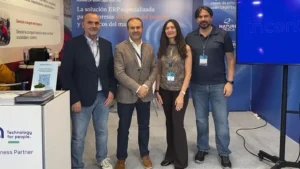
INCENTEA and CEGID attended Conxemar 2026, presenting Seafood DR.
INCENTEA strengthens its expansion in Spain with the integration of Catalan company I2T