When the unexpected puts companies to the test!
For a long time, business resilience was treated as a theoretical concept, discussed in strategic presentations and plans that were rarely put to the test. As we have seen in recent times, that reality has changed: resilience has stopped being an abstraction and become a daily requirement, in which companies, people and the community are deeply interconnected.
Disruptive events, whether climatic, energy-related or operational, have immediate, real impacts. They affect not only infrastructure or financial results, but also people, routines, commitments and the trust built up over years. It is in these moments that you find out whether an organization is prepared or simply running on autopilot.
Technology thus takes on a decisive role, not as an end in itself, but as a means of ensuring continuity, reducing impacts and speeding up recovery. Remote access, reliable real-time information, redundancy and flexible work models have stopped being luxuries and become minimum conditions.
Still, experience shows that plans rarely fail because of big strategic choices; they fail in the details. An access that doesn’t work, a poorly mapped dependency, a team that is not very involved or an unplanned communication. On paper, everything looks solid; in practice, it is the operational details that make the difference.
It is also important to stress that technology, by itself, does not create resilience. What creates it is how it is integrated into the organization and put at the service of people. In moments of pressure, governance models reveal themselves… excessively centralized structures block, while organizations with distributed responsibility react more quickly and calmly.
Finally, learning. Crises expose weaknesses, but they also speed up decisions, force simplifications and show what is really critical. The most resilient organizations do not just return to “normal”, they evolve!
In our Leiria region, we have taken on resilience as a collective commitment. In the end, technology, well used, did not eliminate difficulties, but gave us time, clarity and room to maneuver. And that, in critical moments, can separate a temporary interruption from a prolonged crisis. In short, resilience is built before the crisis, proven during it and consolidated after it!
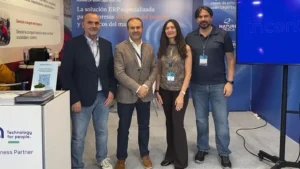
INCENTEA and CEGID attended Conxemar 2026, presenting Seafood DR.

INCENTEA strengthens its expansion in Spain with the integration of Catalan company I2T