
AI: the invisible asset in companies’ tax strategy
Board Member INCENTEA
As companies mature in their approach to AI, it becomes clear that its impact is not limited to transforming operations, and can also extend to how taxation is managed more strategically.
In recent years, artificial intelligence (AI) has been pointed to as one of the main drivers of the new operational excellence, and rightly so, since in different sectors the gains are beginning to be clear, whether in efficiency, in the quality of decisions or in the agility of processes.
Still, amid this enthusiasm, there is one dimension that remains largely off companies’ radar and that can have a direct impact on their competitiveness: the relationship between artificial intelligence and tax strategy.
The Portuguese context, in this respect, is particularly favorable to innovation, providing instruments that allow companies to recover a very significant part of their R&D investment, in some cases exceeding 80%. However, despite this framework, reality shows that many organizations remain far from taking full advantage of this potential. Not for lack of investment, but mainly for lack of an adequate framework.
In practice, what happens is that many artificial intelligence projects are still treated exclusively as technological or operational initiatives, when in fact a relevant share of these projects meets clear criteria to be considered innovation activity and, as such, eligible for tax incentives. It is precisely at this point that a paradigm shift begins to take shape. As companies mature in their approach to AI, it becomes clear that its impact is not limited to transforming operations, and can also extend to how taxation is managed more strategically.
In fact, artificial intelligence itself can play a decisive role in this process, by making it possible to identify eligible activities, structure information for applications and even simulate different tax scenarios, making the entire management of incentives more rigorous, more efficient and aligned with business objectives.
In a context where competitive pressure is growing and efficiency is a critical factor, ignoring this dimension ends up meaning, in practice, leaving value uncaptured.
Perhaps, then, it is time to reframe the question. Instead of asking “how much does it cost to invest in AI?”, it will make more sense to ask how much of that investment can actually be recovered and, above all, how that return can be maximized consistently.
In the end, the operational excellence of the future will be measured not only by the efficiency of processes, but by the ability to reconcile technology, strategy and taxation in an integrated vision, where artificial intelligence is no longer seen as a cost center and clearly establishes itself as a true lever for value creation.
Opinion piece by João Antunes – INCENTEA Board of Directors
Published on April 20, 2026, in Jornal Económico
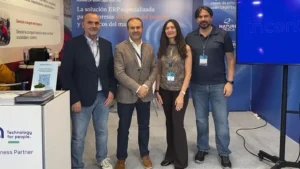
INCENTEA and CEGID attended Conxemar 2026, presenting Seafood DR.

INCENTEA strengthens its expansion in Spain with the integration of Catalan company I2T