Article published in xxxxxxx on September xx, 2026
Storm Kristin left visible marks on Leiria. Interrupted roads, power outages, communication restrictions and disruption to economic activity reminded us of a simple truth: unexpected events will stop being exceptions and become part of normal life.
The question is no longer whether an organization will face a crisis, but how prepared it will be to respond.
From the perspective of a company like INCENTEA, business resilience is not measured only by the ability to recover after adversity. It is measured, above all, by the ability to adapt continuously. In a world where markets change quickly, business models are transformed and technology evolves at an unprecedented pace, companies need to build flexible organizations, agile processes and people capable of continuous learning.
Resilience rests on three pillars: people, processes and technology. People must develop skills for constant learning and the ability to act in uncertain scenarios. Processes must be simple, digital and dynamic enough to accommodate change without causing bottlenecks. And technology must stop being seen merely as an operational tool and take on a strategic role in adapting the business.
It is precisely in moments of greatest unpredictability that technology reveals its true value. Artificial Intelligence, data, the cloud and digital platforms have gone from being mere efficiency tools to critical resilience factors. They allow organizations to better understand what is happening, decide faster, keep teams connected and ensure the continuity of critical processes, even in adverse circumstances. In an economy in constant transformation, companies that invest in these capabilities are not just modernizing; they are building a culture of permanent adaptation, in which learning, innovating and evolving are part of everyday life. It is this combination of technology, talent and the ability to change that sets resilient organizations apart from the rest.
For a mid-sized Portuguese company, investing in these capabilities is no longer a matter of modernization; it is a matter of competitive survival. The best-prepared organizations will be those that can learn faster, adapt more quickly and decide based on data.
Storm Kristin was a meteorological phenomenon. But it also left a management lesson: true resilience is not built during the crisis. It is built every day, through continuous transformation. And this will increasingly be the main competitive advantage of the companies of the future.
Pedro Pereira
Director iCore INCENTEA

When the Storm Passes: The True Test of Organizational Resilience
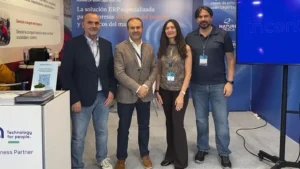
INCENTEA and CEGID attended Conxemar 2026, presenting Seafood DR.