
Cegid Ekon XRP ERP Management Software
ERP designed for companies in processing, foundry, machining and manufacturing of metal components. A solution created for the new generation of industry, which digitalizes your plant, controls your costs and ensures full traceability of your industrial processes.
The real challenges of the metalworking and iron and steel industry.
The metalworking and iron and steel industry is a pillar of the production fabric, but it faces growing complexity arising from regulatory requirements, raw material price volatility, pressure on margins and the need to improve operational efficiency.

Common challenges in the sector.
Industrial companies share critical challenges such as:
- Regulatory compliance and full material traceability;
- Optimization of complex industrial processes: foundry, cutting, machining, processing and assembly;
- Adapting to a global market shaped by energy and raw material fluctuations.
To maintain profitability, efficiency and sustainability, a specialized ERP capable of integrating the entire industrial value chain into a single system is essential.
Find out how to tackle these challenges with an industrial ERP.
Ekon XRP Cloud: an ERP designed for industry.
Ekon XRP Cloud is a state-of-the-art ERP designed specifically to drive the digitalization of metalworking and iron and steel companies.
Its modular cloud architecture, together with artificial intelligence capabilities, enables integrated management of production, material traceability, cost control and regulatory compliance, providing a unified, real-time view of the plant and the business.

Legal compliance without additional development.
Ekon XRP Cloud meets the requirements of Electronic Invoicing and Verifactu, ensuring tax compliance without the need for extra development or complex integrations.
This ensures efficient, secure invoicing management aligned with current regulations, reducing risks and operating costs.
Full control of the production process and costs.
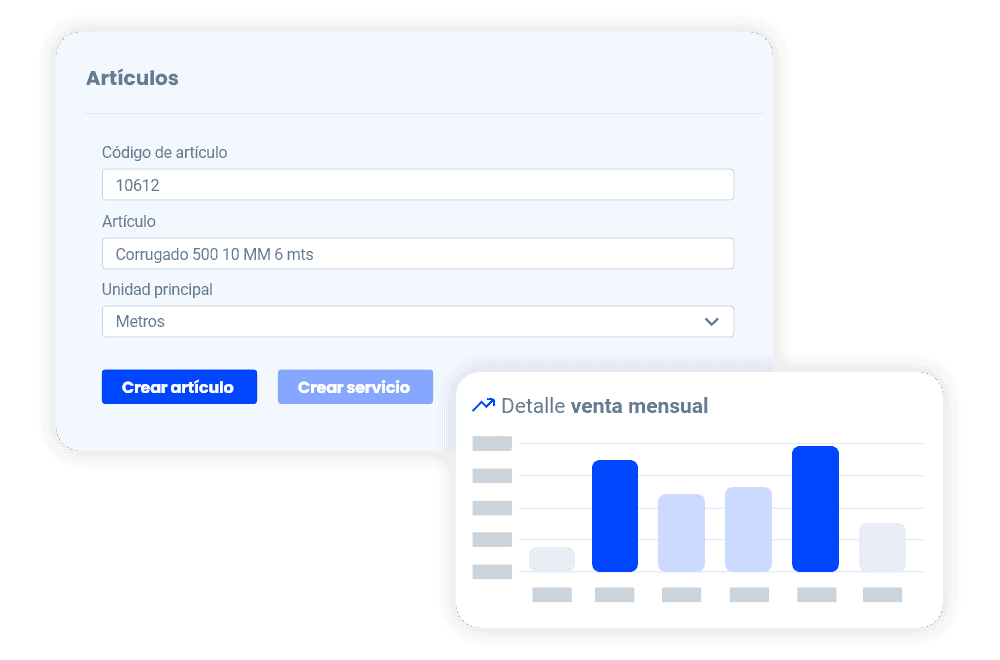
A single system for the entire industrial operation that eliminates information silos, automates routine tasks and speeds up decision-making, providing a complete view of the real state of the plant and the business.
Operational efficiency to improve profitability.
- Automation of industrial and administrative processes;
- Reduction of scrap and waste;
- Optimization of resources, machinery and production times;
- Reliable real-time information for management and the plant.
Connecting the plant with business management.
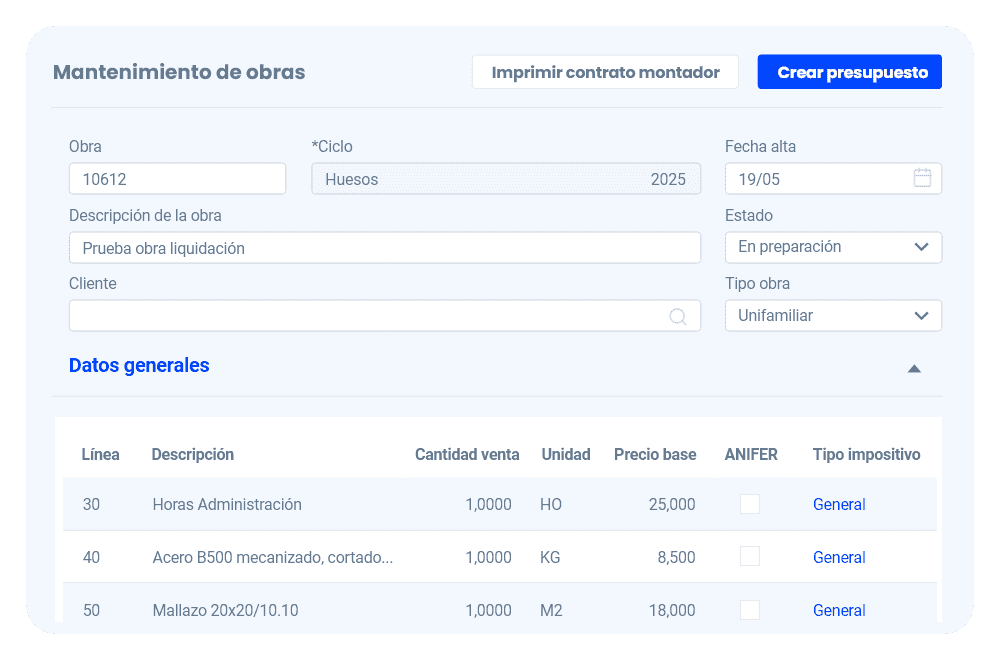
In a metalworking or iron and steel plant, the most critical data is generated in the workshop and on the production line. That is why an ERP that connects the plant, administration and management in real time is key to profitability.
Capturing data at the exact moment events occur — receipt of materials, start of orders, quality controls — makes it possible to:
- React immediately to deviations or stoppages;
- Optimize the use of machinery and resources;
- Ensure regulatory and documentation compliance;
- Control margins and bills of materials at each stage of the process.
Key areas of the solution.
The key areas of the Ekon solution optimize processes and improve operational efficiency in the sector.
Advanced warehouse management.
Full control of internal and external warehouse movements, with batch traceability and real-time location of materials.
Includes detailed tracking of carriers and drivers for logistics that are more efficient, safer and aligned with production rhythms.
Financial control and commercial optimization.
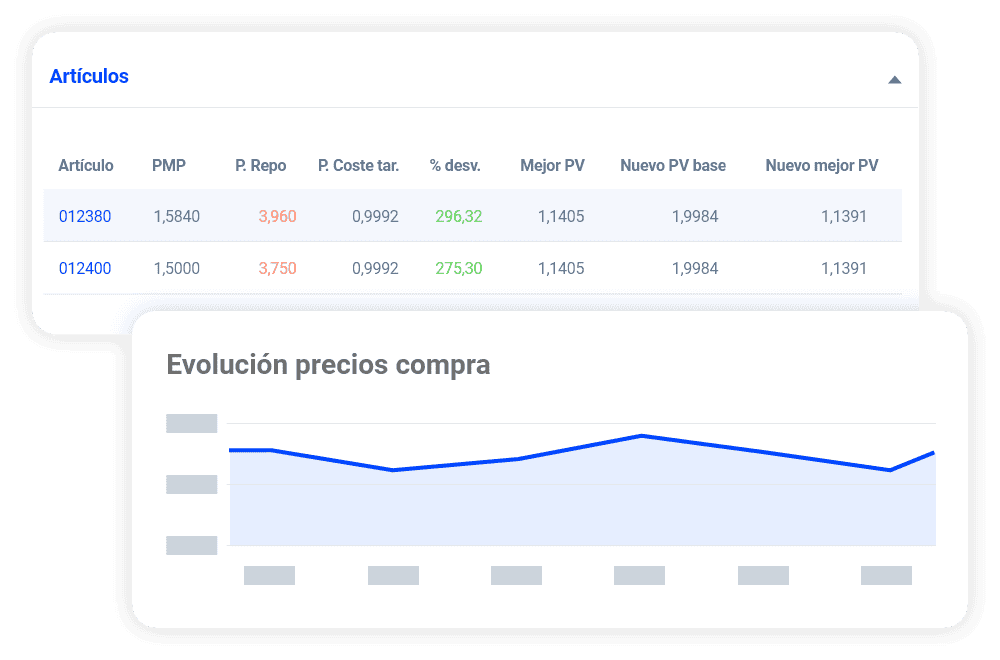
Unified, real-time view of finance, purchasing and sales, making it easier to manage adjustments arising from raw material price fluctuations.
Allows you to optimize margins, automate invoicing and manage contracts and orders with greater accuracy and profitability.
Quality management and regulatory compliance.
Comprehensive control of industrial quality, environmental and occupational safety processes.
Centralizes documentation of inspections, non-conformities and audits, ensuring compliance with standards such as ISO 9001, ISO 14001, REACH and RoHS.
Data analysis and operational intelligence.
Real-time use of key ERP data through interactive dashboards integrated with Cegid Vision, facilitating control of costs, margins and plant performance for strategic decision-making.
Main features of the industrial ERP.
Production and industrial processes.
- Advanced work order and production management, standard and project-based;
- Automatic generation of orders from sales orders, technical configurations or stock replenishment;
- Process control: cutting, machining, casting, rolling, welding, heat treatments, assembly and fitting;
- Integration with MES, scales and data capture devices
Cost control and bills of materials.
- Detailed calculation of bills of materials and direct and indirect costs;
- Dynamic unit cost management with adjustments for raw material price variations;
- Real-time margin calculation and control.
Material traceability and control.
- Exhaustive control of raw materials and batches from receipt to final delivery;
- Traceability of intermediate processes, heat treatments and quality certifications;
- Advanced reports to ensure control and regulatory compliance.
Quality and regulatory compliance.
- Comprehensive management of quality, environment and occupational safety;
- Control of inspections, non-conformities and audits;
- Centralization of technical documentation: drawings, data sheets, certificates and specifications;
- Compliance with ISO 9001, ISO 14001, REACH and RoHS.
Warehouses, logistics and shipments.
- Advanced management of locations, batches and movements;
- Complete administration of shipments and carriers;
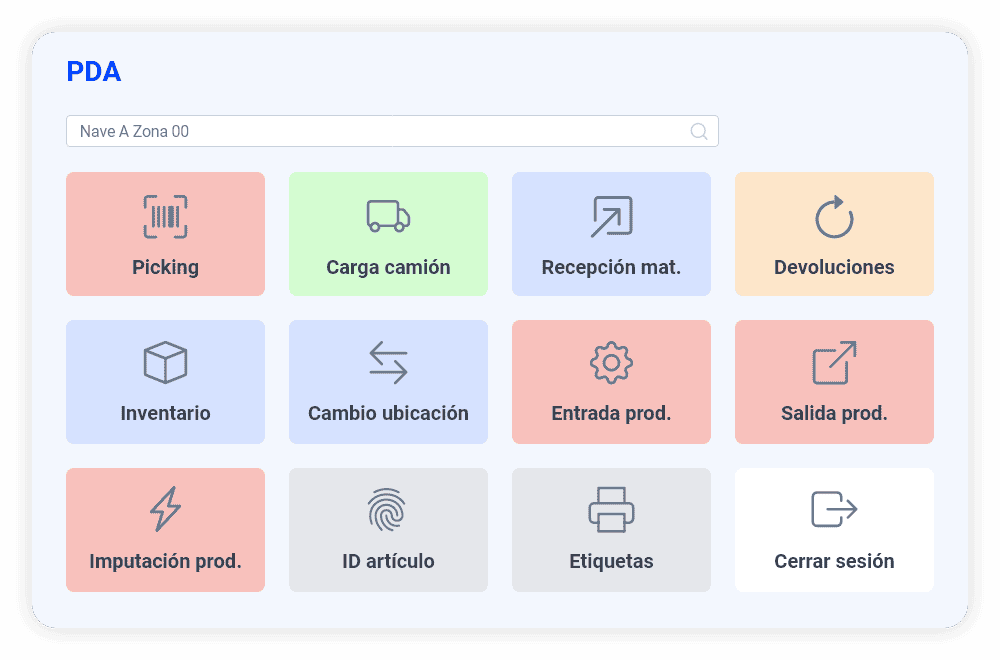
- Barcode reading, label printing and management of returnable packaging.
Purchasing and procurement.
- Automation of supplier orders;
- Management of negotiations and adaptation to market volatility;
- Supply assurance aligned with production planning.
Finance and tax compliance.
- Integrated view of finance, purchasing and sales;
- Administrative and accounting automation;
- Full compliance with Electronic Invoicing and Verifactu.
Environment and sustainability.
- Management and traceability of industrial waste;
- Document control in line with current environmental regulations.
What our customers say.
”Thanks to the full integration of plant and administration, we now make decisions on costs, stock and deadlines in real time. The Ekon XRP Cloud solution lets us adapt with agility to a market where the price of raw materials changes constantly and traceability is a mandatory requirement.
Julio García Ramis de AyreflorDirector de Transformación – Hierros y Aceros de Mallorca

FAQs - Frequently Asked Questions.
How long does it usually take to implement an industrial ERP in a company in the metal sector?
The estimated time is usually between 9 and 18 months, depending on the scope of the project and, above all, on the maturity level of the processes and the quality of the existing data. Implementing finance, purchasing and sales is not the same as also tackling production, warehouses, logistics, quality, traceability or shop-floor integrations. In this type of environment, the most advisable approach is a phased implementation, prioritizing critical processes first to ensure a solid foundation and gradual adoption.
What aspects are key for an ERP to work well in a metalworking or iron and steel company?
In addition to covering finance and sales management, the ERP must respond competently to industrial reality: production control, material traceability, warehouse management, logistics coordination, shipments, quality and cost control. The real difference lies in its ability to integrate the entire value chain, from the arrival of raw materials to final delivery to the customer, and to adapt to the particular way each company manages its customers, orders, commercial terms and daily operations.
How does the ERP help control industrial costs better?
An industrial ERP makes it possible to control not only the direct costs of materials and labor, but also indirect costs that are often not allocated correctly: energy, scrap, setups, transport, freight, handling, storage or external services. This is essential to know the real profitability per product, order, customer or process. In addition, having integrated KPIs and management indicators makes it easier to analyze deviations, anticipate problems and make decisions with better judgment.
Can the ERP adapt to metal price volatility and help protect margins?
Yes. In metalworking and iron and steel companies, variation in raw material prices has a direct impact on manufacturing costs and on the profitability of each order. An industrial ERP must allow you to work with metal market references or indices to update costs, review bills of materials and recalculate margins in real time. This helps make better purchasing, production and sales decisions, and react more quickly to market changes.
Can the ERP improve warehouse, transport and logistics management?
Yes. In a metal company, efficiency does not depend only on manufacturing well, but on properly coordinating supplies, internal movements, locations, shipments, loads, carriers and deliveries. A specialized ERP helps provide visibility and control over all of this logistics operation, reducing errors, delays and unnecessary costs. If it also includes mobility and real-time data capture, it significantly improves the day-to-day execution of warehouse, plant and shipments.
Can the ERP adapt to metal price volatility?
Yes. An industrial ERP can use market references to update raw material costs, review bills of materials and recalculate margins in real time. This makes it possible to react more quickly to market changes and make better purchasing, production and sales decisions.
What advantages does a specialized ERP have over a general-purpose solution?
The main advantage is that it responds better to the real processes of an industrial company. It is not just about invoicing or accounting, but about coordinating production, purchasing, warehouses, logistics, costs, quality and compliance in a single system. In addition, solutions such as Ekon XRP Cloud provide high-value cross-functional capabilities, such as document management, mobility, artificial intelligence applied to finance, and dashboards with KPIs and management indicators that maximize the daily work of everyone involved in the process. When this is not properly addressed, the company ends up depending on Excel, manual controls and parallel systems, with less visibility and a weaker ability to decide.
Shall we talk about your industrial plant?
Our team specialized in the metalworking and iron and steel industry can help you improve the efficiency, control and profitability of your processes.


